Beyond automation: The human core of filmmaking in an AI-driven era (Interview)
As artificial intelligence and digital systems reshape the mechanics of film production, the essence of storytelling remains deeply human. Industry expert Florian Reimann reflects on what will change and what must not.
The film industry is undergoing a profound transformation. With the rise of artificial intelligence, automation, and increasingly sophisticated production tools, the way films are made is evolving at a rapid pace.
Yet beneath these technological shifts lies a fundamental question: what remains inherently human in filmmaking? Florian Reimann, CEO of Yamdu – the world’s leading pre-production and planning hub for media creation – and a seasoned European producer, offers a perspective shaped by years of experience across development, production, and innovation.
His insights reveal a future where efficiency and creativity must coexist without compromising the soul of storytelling.
The invisible infrastructure of future filmmaking
Looking ahead, Reimann suggests that the technical backbone of filmmaking will become almost imperceptible. The “plumbing” of production – data handling, scheduling, and asset management – will increasingly operate seamlessly in the background. As he puts it, “data, schedules, and assets will flow seamlessly and automatically,” removing much of the friction that currently slows productions down.
However, this transformation will not extend to the heart of filmmaking. Creative instincts, storytelling, and human relationships will remain central. Reimann emphasizes that “storytelling, trust, and human judgment will remain at the core,” even as workflows evolve. While departments may become less siloed and processes more democratized, essential creative decisions like tone, performance, and moral perspective, will continue to rely on human sensitivity and collaboration.
Creativity unlocked through connected workflows
For independent filmmakers, technological integration offers more than just logistical improvements. It creates space for creativity. Reimann highlights how much time is currently lost to inefficient processes: “Think about how much energy is wasted chasing updates, searching for attachments, or retyping information into spreadsheets.”
By introducing centralized systems and a “single source of truth,” filmmakers can reduce errors and eliminate unnecessary communication loops. The result is a shift in focus. As Reimann explains, “reducing that friction means creatives can focus more on what truly matters.” Time saved on administration becomes time reinvested in storytelling.
The value of friction in the creative process
Despite the push toward efficiency, Reimann warns against eliminating friction entirely. In creative work, friction often plays a vital role. He illustrates this through the example of a costume designer engaging with a script, questioning character choices and exploring possibilities. These discussions, he argues, are “essential – they’re part of the collaborative puzzle that shapes great storytelling.”
However, once production is underway, priorities shift. At that stage, efficiency becomes critical. Tools such as AI-driven script breakdowns and change tracking help teams manage complexity without disrupting creativity. Reimann summarizes this balance succinctly: “creative exploration needs friction. Operational processes, once the ‘train is moving,’ should be as frictionless as possible.”
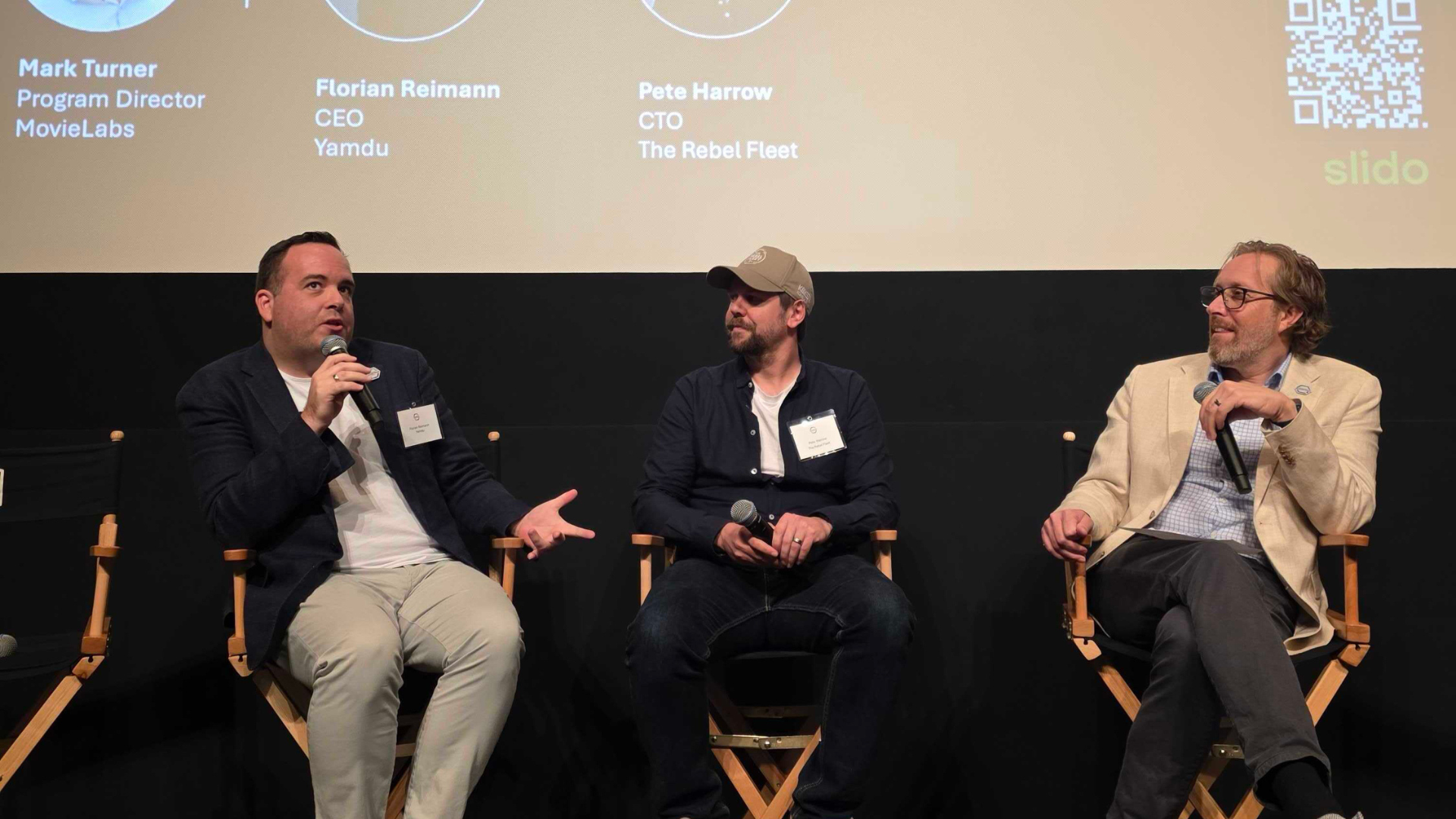
AI as assistant, not author
Rather than drawing a strict line between human creativity and machine efficiency, Reimann sees a more fluid relationship. “It’s less about lines and more about circles,” he explains. AI should function as a supportive assistant – generating suggestions, automating repetitive tasks, and enhancing clarity. Yet human oversight remains indispensable.
Every AI-generated output must still be evaluated, refined, or rejected. While technology can streamline logistics – such as organizing travel itineraries – it cannot replace interpersonal skills. Reimann notes that when problems arise, such as an unhappy actor, “no algorithm will solve that.” In fact, soft skills like empathy and communication may become even more valuable in an increasingly automated environment.
Data as the nervous system of production
Production data is no longer mere paperwork. It has become integral to decision-making. While intuition and experience still guide creative choices, data introduces a new level of accountability and insight. Reimann acknowledges that “decisions may benefit from being data-driven rather than purely instinctive,” particularly in complex or long-term productions.
Data analysis can uncover inefficiencies, identify patterns, and even highlight environmental impacts. These insights enable teams to make more informed decisions, whether to improve creative output or increase profitability. As Reimann notes, how these efficiencies are ultimately used remains “a question as old as the industry itself.”
The rise of AI also introduces complex ethical challenges. Issues of authorship, intellectual property, and consent are becoming increasingly relevant. Producers must now ask critical questions about the origins and legality of AI-generated content.
Reimann points out the importance of understanding “which models and tools were used” and whether the output is truly original or potentially infringing. These concerns are reshaping industry roles and responsibilities. While standards and regulations are still evolving, the need for vigilance is clear. The industry must collectively navigate these challenges, balancing innovation with protection.
Democratization vs. consolidation
Technological advances have historically expanded access to filmmaking, and AI may continue this trend. Reimann draws parallels to earlier shifts, such as the move from 35mm film to digital production, noting that new tools are putting advanced capabilities into the hands of independent creators.
At the same time, he acknowledges the growing power of distribution platforms. While creation may become more democratic, access to audiences could become increasingly centralized. Still, history suggests that disruption often creates opportunities. “Every technological shift […] has also created opportunities for smaller players to challenge the established ones,” he observes.
Guidance for the next generation
For emerging filmmakers, navigating this evolving landscape requires a combination of technical, ethical, and creative skills. Reimann encourages them to embrace modern tools and workflows while also cultivating interpersonal abilities. Communication, collaboration, and emotional intelligence remain essential foundations. Ethically, curiosity and critical thinking are key.
Filmmakers must stay aware of issues around copyright, intellectual property, and content provenance. At the same time, they should not lose sight of their creative drive. Reimann’s advice is simple but powerful: “follow your passion […] find your way to bring it to life.” In an era where barriers to entry are lower than ever, the opportunity to create is broader. The challenge and responsibility is to shape the future of filmmaking with both innovation and integrity.
Photo credit: Florian Reimann



You may also be interested in: