Mentors agree that the FMK UCM in Trnava is surprising in how quickly it responds to the needs of the professional world
A panel of three industry experts evaluated our students’ agency projects. They offered constructive criticism and plenty of praise.
The integration of theory and practice, real-world clients, and current trends such as artificial intelligence (AI) and SEO. These are just some of the reasons why the Faculty of Mass Media Communication at UCM in Trnava has long collaborated with industry experts. As part of the Digital Marketing Platforms course, students had the opportunity to work on an assignment that mirrored a real agency project: designing a communication strategy for an e-shop.
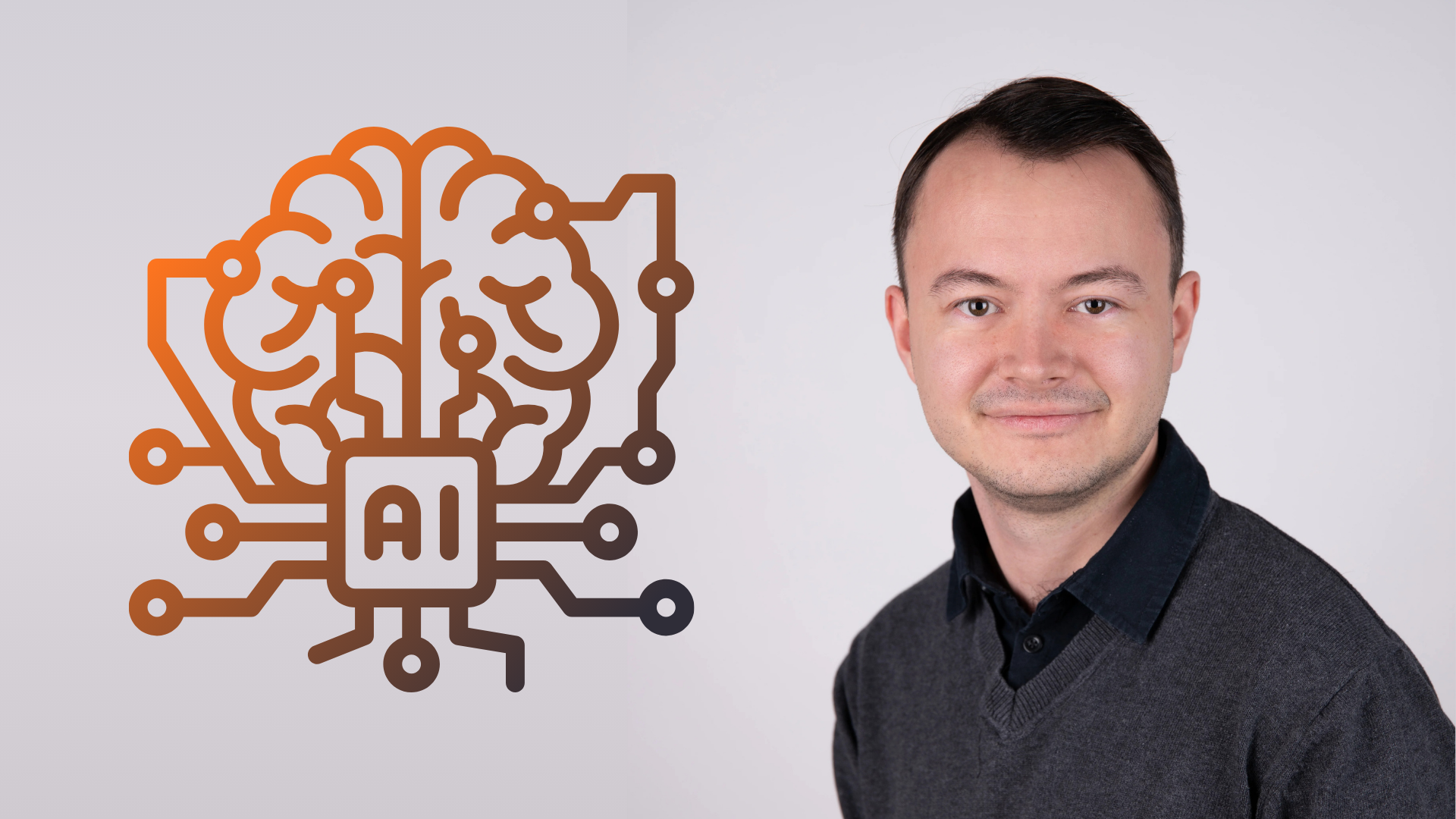
These projects were evaluated directly by industry professionals. Viliam Kaniansky (CEO of Made It Digital), Tomáš Lukáč (SEO Specialist at GymBeam), and Katarína Švejnová (Content Marketing Specialist at Invelity) shared their thoughts on the completed projects with us.
Everyone should find an internship
The students were tasked with designing a complete communication strategy from scratch for the new e-shop "Vlásenky od Lenky." From an agency owner's perspective, were the deliverables prepared in such a way that a client would actually purchase them?
Viliam Kaniansky: There were some interesting ideas and implementations that deserved to be presented to the client. I liked the presentations best that were consistent from start to finish and were able to extract the necessary insights from the analysis, which they then applied to their designs. I would definitely—after incorporating the feedback—forward those to the client. This is also standard practice at our agency. I was surprised that there was something interesting in every presentation.
It’s hard to build trust in a new e-shop that no one knows—and that was precisely the challenge of this assignment. Did the students succeed in capturing that moment in their designs when a casual visitor becomes a paying customer, or did they focus too much on the visual aspect?
Viliam Kaniansky: I would say that "Vlásenky od Lenky" operate in a highly competitive market. Even in the presentations, the competition was barely mentioned. In my opinion, what was included in the presentations was just the basics. A lot would depend on implementation and other channels, because "Vlásenky od Lenky" has to build an audience for these channels (social media and newsletter) from scratch. This means the road to paying customers will still be a long one.
Vilo, to wrap things up—do you see an improvement in the quality of graduates thanks to this collaboration with the university? Is it an advantage for an agency like Made It Digital to be involved in teaching and to “train” future colleagues right in the process?
Viliam Kaniansky: As an agency, we work with interns. We’ve already mentored quite a few of them. This kind of collaboration is definitely beneficial, because it gives us insight into what students are learning in school, and I believe our mentoring is also valuable to them. In any case, I would recommend that every student find an internship early on to deepen their knowledge. By the end of their studies, they’ll be well-prepared for the real world and will have a better chance of finding a job as marketers.
A strong brand is also very important for SEO
Tomáš, at GymBeam you work with massive amounts of data, and SEO is crucial for you. The students were tasked with developing social media and branding for a new e-shop. From your perspective, is it important for Google and the domain’s overall authority that the brand is also “active” on social media? Does high-quality content on Instagram indirectly benefit your field—that is, search?
Tomáš Lukáč: Social media helps build a brand, and a strong brand is also very important for SEO. This was true 10 years ago, and it’s even more true today. In SERPs, as well as in AI Overviews, AI Mode, and LLM chatbots, it’s mainly the big brands that people know and trust that dominate.
High-quality social media content also indirectly boosts organic traffic for several reasons. Direct visits – people who know you from social media are more likely to search for you directly (branded searches). Google views this as a strong signal of credibility. Brand authority – when people recognize your brand, they are more likely to click on your search result rather than a competitor’s. A higher CTR (click-through rate) from the SERP is also an important signal.
Vlásenky od Lenky are just getting started, while GymBeam is already a beloved brand. Did you notice any moments or ideas in the students’ strategies that had the potential to spark a “viral” effect, or did they keep things more down-to-earth? What do you think is more important for a small e-shop like this in 2026—a flawless technical setup or a strong social media community?
Tomáš Lukáč: I think they kept their feet on the ground, which I believe is perfectly fine in this case. Viral content is certainly appealing, but it can’t be planned, and if an entire strategy is built solely on it, things often don’t turn out as expected. In my opinion, what’s most important for this type of product is building a community, sharing know-how, and offering inspiration—and that came up in several projects.
One of the assignments was a competitive analysis. In the world of SEO, this is second nature. How would you rate the students’ ability to navigate the market? Were they able to identify their competitors’ weaknesses and use them to their advantage, or was it just a superficial “scanning” of other profiles?
Tomáš Lukáč: When it comes to the competitive analyses in the students’ papers, I’m pleased to see that many of them looked abroad as well. They tried to learn from major brands operating in a much more competitive environment. That’s the right approach—to draw inspiration from mature markets and bring proven strategies to Slovakia.
As for the weaknesses, I would point out that for the most part, it was just a list of what the competition is doing, what metrics they have, how many followers they have, and how often they post. There was a lack of deeper analysis of the “why” and strategic thinking. Only in a small number of cases did students try to find a strategy that would differentiate them from the competition—for example, targeting a different type of content, reaching out to influencers, or utilizing a channel that the competition ignores.
Today, it's the authentic story that matters
Katka, hair accessories may seem like a visually appealing but perhaps somewhat overused topic. Were the students able to stand out with their designs and create something you’d actually save or share, or did it devolve into the classic “buy a pretty hair clip”?
Katarína Švejnová: To be honest, I went into this with a slight concern that it would end up being the typical “buy a pretty hair clip, we have a 20% discount.” So I was all the more pleasantly surprised that several teams approached this topic differently.
The students stood out particularly in that they presented hair accessories not merely as fashion accessories, but as part of one’s identity, self-expression, or daily rituals. I can conclude that a large number of students understood that today it is not enough to describe a product’s benefits; one must offer a meaningful and authentic story.
The assignment also included a newsletter, which many students dread because they view it as spam. Did you see an effort in their designs to add value through email (such as tips on hairstyles or skincare), or did they just treat it as a sales channel? Do you think email marketing makes sense even for this type of product?
Katarína Švejnová: The newsletter was a real challenge for many, but you could see the effort to provide added value through email. I liked that in many cases it wasn’t just a list of products with a “buy” button, but rather an effort to offer the recipient added value. And that, in my opinion, is exactly where email marketing makes sense.
Email marketing isn’t spam if it respects the recipient’s time and attention. If it inspires, educates, or solves a specific problem, it can be a powerful marketing tool. And I think many teams have understood this principle.
When creating a content plan, students often come face to face with reality—coming up with 30 posts is easy, but actually producing them is another matter. Were their plans sustainable? Did they consider that the e-shop is run by a single person who can’t spend four hours a day shooting Reels, or was this production efficiency simply missing from the plan?
Katarína Švejnová: This is exactly the point where the difference between a nice school project and a feasible strategy becomes clear. Proposing 30 creative posts per month is relatively easy on paper. But if we imagine that the e-shop is run by a single person who handles orders, customer service, and logistics, the reality looks quite different. From this perspective, some proposals seemed overly ambitious. There was a bit of a lack of a realistic view of time, energy, and budget. Overall, however, I would say that the students really tried their best.
The Intersection of Artificial Intelligence and Theory
The FMK responds to trends with great flexibility, as evidenced by its emphasis on the practical application of AI tools in assignments. In your opinion, how is the ideal profile of a marketing graduate changing today? Should it focus more on the ability to adapt quickly to new technologies, or on a solid grasp of the theoretical foundations of marketing?
Tomáš Lukáč: It’s definitely great that students have quickly adapted to new technologies and are using them in their studies and when writing term papers. In my opinion, the use of LLM in marketing is already standard, and this trend will only continue to grow. What surprised me a bit was that no one proposed AI-generated content, videos, or a virtual influencer in their strategy.
Viliam Kaniansky: It’s certainly important to respond to new trends, and I think that’s precisely where the opportunity for education lies—in striving for flexibility. In any case, I believe that the fundamentals also have their place in school. We see in practice that when it comes to higher-level goals, digital performance today can hardly do without the fundamentals, namely branding and an overall marketing strategy.
AI is here to stay, and its development will be very rapid, at least in these early years. I’m rooting for FMK—and other schools as well—to successfully embrace this trend and teach students how to adapt quickly to new technology. I think that will be key.
Katarína Švejnová: In my opinion, the ability to quickly adapt to new technologies, including AI, is a huge competitive advantage. Marketing is currently changing at an incredible pace. In such an environment, flexibility, curiosity, and a willingness to experiment are more valuable than rote memorization of rules. However, basic marketing principles, consumer psychology, and strategic thinking remain the foundation.
AI can help you generate content, analyze data, and optimize campaigns, but it can’t think conceptually for you or take responsibility. So, for me, it’s not about “AI versus marketing principles.” It’s about the ability to bridge these two worlds and fully leverage their potential.
FMK responds to current trends
According to the experts, Vlásenky od Lenky communication strategy project was more than just an assignment for the students. It was a real-world test of their readiness for the dynamic world of marketing. A discussion with Viliam Kaniansky, Tomáš Lukáč, and Katarína Švejnová revealed not only the great potential in the students’ work but, above all, confirmed the immense importance of linking academia with professional practice.
It is precisely this confrontation with reality—whether it involves the sustainability of content plans, the depth of competitive analysis, or the strategic use of social media for brand building—that moves students from theoretical lessons to practical skills. The ability to respond flexibly to new trends, such as artificial intelligence today, while standing on a solid foundation of marketing craftsmanship, is proving to be a key competency for the next generation of marketers.
We would therefore like to thank the mentors for their time, openness, and valuable advice, which represent the best investment students can make in their professional future. The project also demonstrates that the FMK UCM in Trnava is effectively responding to the needs of the ever-changing digital environment and preparing graduates who will be a real asset to the workforce.
Author of the article and source of the photos: Michal Kubovics, Adam Sijerič



Mohlo by vás tiež zaujímať: